
Solar Power: Economics of Utility‑Scale vs Rooftop
Master the Moment and Reach Your Peak with Defoes
“Defoes separates wholesale from household economics — showing why ultra‑cheap utility‑scale PV will anchor bulk decarbonisation, while higher‑cost rooftop systems still make sense wherever they undercut retail tariffs and buy energy sovereignty.”
Utility‑scale and rooftop solar are often presented as two versions of the same story. Economically, they increasingly serve different functions. Global cost data show that utility‑scale solar remains the cheapest way to produce new solar electricity, while rooftop systems, though more expensive per kilowatt‑hour, can still be attractive when they offset retail tariffs and offer energy‑sovereignty benefits. The bullish stance from Defoes’ perspective is that both segments have durable roles — but for different reasons and with different risk‑return profiles.
Utility‑scale solar: lowest‑cost bulk generation
On pure generation cost, utility‑scale solar is the benchmark. Lazard’s 2024 LCOE analysis finds that onshore wind and utility‑scale solar have the lowest levelised cost of electricity among new‑build generation options, with utility‑scale solar ranging from about 29 to 92 dollars per megawatt‑hour depending on market and project specifics. Community, commercial and industrial‑scale projects come in higher, at around 54 to 191 dollars per megawatt‑hour, while residential solar ranges from roughly 122 to 284 dollars per megawatt‑hour. In other words, utility‑scale solar sits firmly at the bottom of the cost stack; rooftops sit much higher.
International Renewable Energy Agency data underline the trend. The global weighted‑average LCOE of utility‑scale solar PV fell to about 0.043 dollars per kilowatt‑hour (43 dollars per megawatt‑hour) for projects commissioned in 2024, down 12% from 2023 and almost 90% from 2010 as total installed costs dropped by 83% over the past decade. In high‑resource markets such as China and India, the lowest LCOEs for new utility‑scale plants now reach roughly 33–38 dollars per megawatt‑hour, while even in the United States, average utility‑scale solar costs around 70 dollars per megawatt‑hour. For investors, this establishes utility‑scale PV as one of the cheapest sources of bulk electricity globally, with economics driven by capex, financing conditions, capacity factor and grid‑connection costs.
Rooftop solar: higher LCOE, but different value drivers
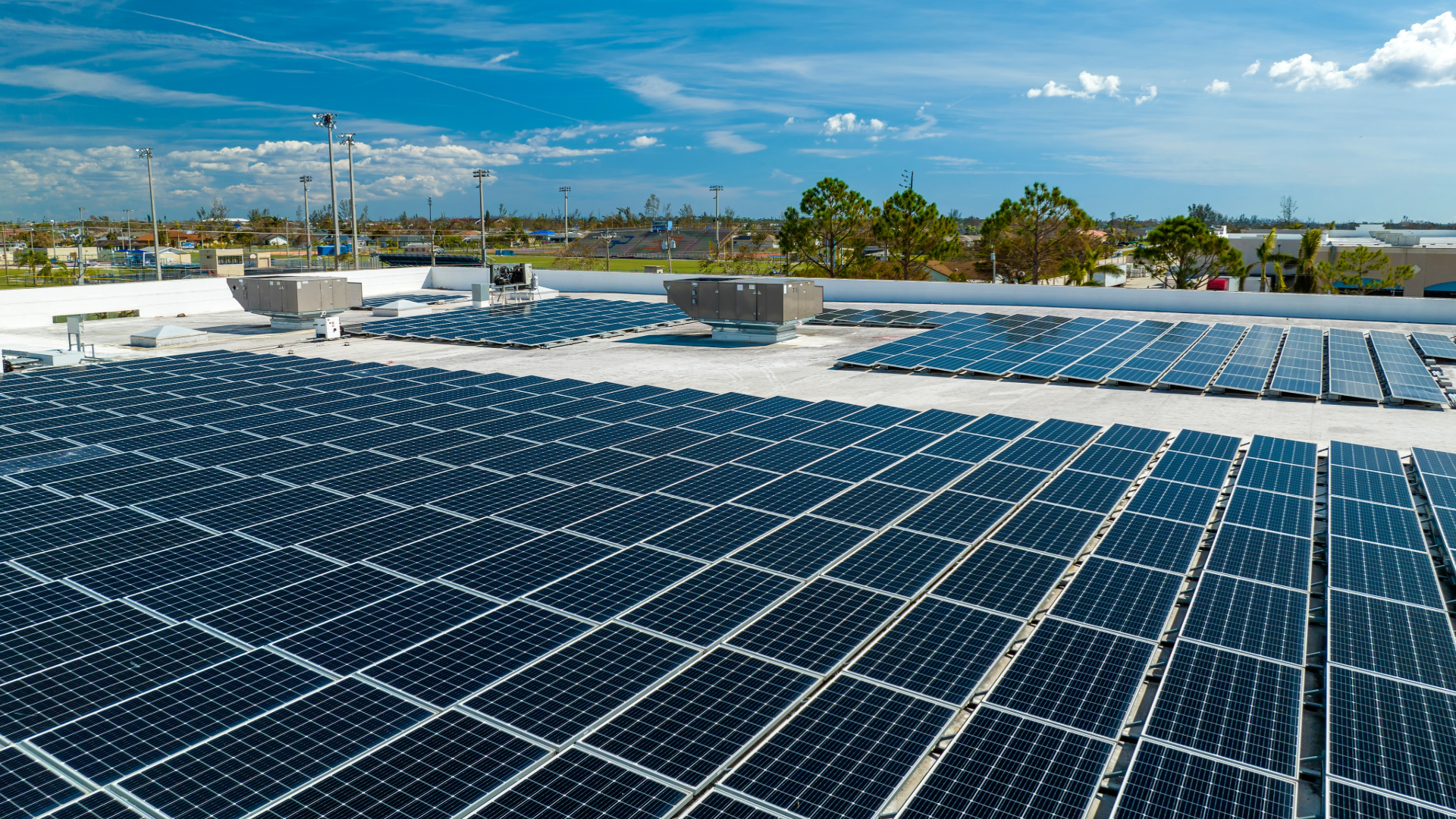
Rooftop systems, by contrast, remain more expensive per unit of energy but compete against a different benchmark: retail tariffs rather than wholesale prices. The same Lazard analysis shows residential solar LCOEs several times higher than utility‑scale equivalents. Yet households and businesses do not buy wholesale power; they pay retail rates that incorporate network charges, levies and supplier margins. In many markets, especially in Europe, those all‑in retail prices can already exceed the effective LCOE of rooftop PV, making self‑consumption economically viable despite higher generation costs.
European analyses of the rooftop PV market highlight this distinction. By 2024, solar PV supplied about 11% of the EU’s power, with rooftop systems playing a growing role in countries with high retail tariffs and supportive self‑consumption regimes. Studies of residential PV‑battery systems in Europe show that when households maximise self‑consumption, rooftop PV paired with storage can significantly cut grid purchases and improve payback periods, even if the underlying LCOE remains above that of utility‑scale projects. For prosumers, the relevant metric is often the gap between the retail rate and the all‑in cost of self‑generated and stored power — a gap that widens as retail prices rise or as policy encourages self‑consumption.
Why both segments matter in a bullish solar thesis
The economic divergence between utility‑scale and rooftop segments is therefore not a weakness; it is a sign of functional specialisation. Utility‑scale solar’s role is to deliver the lowest‑cost bulk energy and anchor system‑wide decarbonisation, increasingly in tandem with large‑scale storage and grid‑level flexibility. Rooftop solar’s role is to reduce end‑user exposure to volatile retail prices, alleviate local network constraints, and embed generation closer to load, often in ways that can complement utility‑scale assets rather than compete with them.
From a Defoes standpoint, the bullish stance on solar economics is conditional and differentiated. On one side, utility‑scale projects will continue to drive down the cost of low‑carbon electricity and dominate volume growth where land, grid capacity and permitting align with capital. On the other, rooftop and distributed systems will remain economically relevant wherever retail tariffs and policy frameworks make self‑consumption and prosumage valuable, even if their LCOEs never match utility‑scale benchmarks. For disciplined capital, the task is to map which markets reward scale, which reward proximity to load, and how policy and pricing structures translate those different economics into bankable cash flows across the utility‑scale and rooftop spectrum.