
Forestry as a Dual-Use Solution
Master the Moment and Reach Your Peak with Defoes
“Forestry’s strongest long-term proposition lies in its ability to combine productive timber supply with carbon, biodiversity, and resilience objectives. This depends on active stewardship, credible evidence, and management that protects the forest’s capacity to serve both markets and ecosystems.”
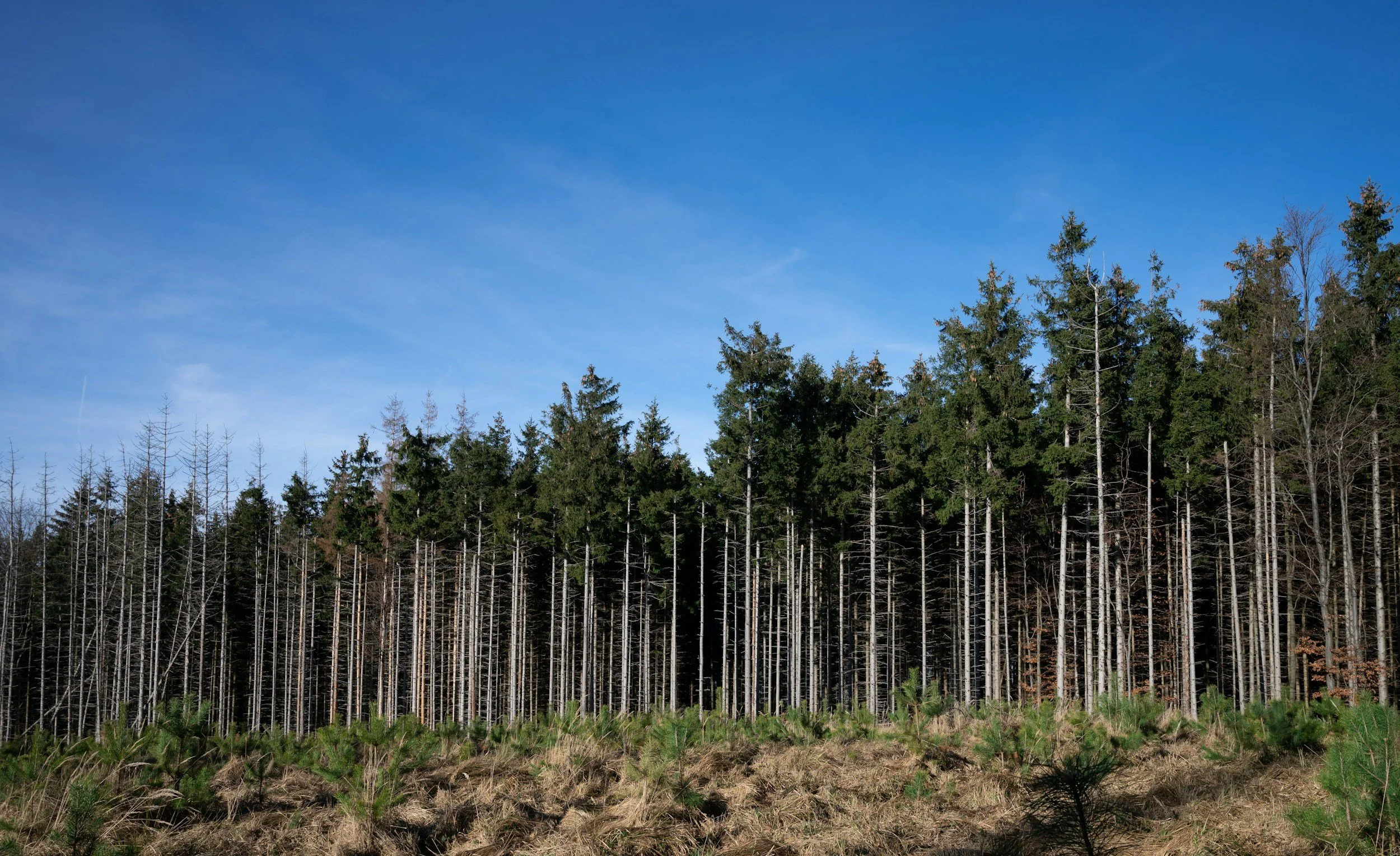
Forestry is increasingly assessed as a dual-use land strategy: a source of renewable timber alongside a managed contributor to carbon storage, biodiversity, water resilience and rural economic activity. For investors and landowners, this is important because a forest’s value is no longer defined solely by the volume of standing timber or its potential harvest income. The most relevant question is whether the forest can deliver commercial utility while maintaining the ecological conditions that sustain its long-term productivity. Sustainable forest management is designed around precisely this balance: retaining forest vitality, regeneration capacity and biodiversity while enabling economic and social benefits now and in the future.
The commercial case begins with timber. Wood remains a widely used material across construction, packaging, furniture, paper, panels and a growing range of bio-based products. Productive forests can support local employment, domestic supply chains and renewable-material demand. In the UK, this has heightened relevance because the country imports around 80% of its timber. Yet timber production alone does not create a resilient forest asset. Species mix, age profile, road access, processing capacity, market proximity, forest health and harvesting practice all affect the ability to generate income and respond to changing demand. A dual-use strategy therefore treats commercial forestry as active stewardship rather than passive ownership.
The second use is environmental performance. Growing forests remove carbon dioxide from the atmosphere, while managed woodland can protect soils, regulate water and create or maintain habitat. In appropriate circumstances, harvested wood used in long-life products can also retain biogenic carbon beyond the forest. However, these benefits must be assessed realistically. A claim relating to carbon storage depends on forest condition, harvesting and regeneration practices, product use, lifecycle emissions and end-of-life treatment. Biodiversity outcomes similarly depend on the forest’s composition, connectivity, management intensity and protection of sensitive habitats. A single sustainability label cannot fully capture these factors. The stronger position is one supported by management plans, monitoring, traceability and an acknowledgement of material limitations.
This creates an important distinction between sustainable forestry and simple tree planting. New woodland can be valuable, but it does not automatically provide the ecological diversity, resilience or carbon outcome expected over time. Forests face material risks from drought, wildfire, pests, disease, storm damage and changing regulation. A commercially attractive species may be less resilient to future climate conditions; a strategy focused narrowly on rapid growth may compromise other environmental objectives. Good forest management therefore requires a longer time horizon. It considers how the asset will adapt, regenerate and continue to serve multiple functions under different market and environmental scenarios.
The UK Forestry Standard provides a practical framework for this discipline. It sets government requirements for sustainable forest management across the UK and covers biodiversity, climate change, soils, water, people, landscape and the historic environment. It applies to all woodland, regardless of ownership or management, and informs regulatory decisions, grants and forestry operations. This means commercial and environmental objectives should not be treated as separate workstreams. They are interdependent elements of responsible woodland management.
For clients assessing forestry, the opportunity lies in understanding how these functions work together. Timber can offer exposure to a scarce physical resource and long-term structural demand. Carbon, biodiversity and water considerations may strengthen the asset’s relevance, but they also raise the standard of evidence required. The obstacle is complexity: different income sources, reporting frameworks and ecological outcomes may not align over the same timeframe. Defoes helps clients understand the asset, evaluate its management and market context, and access clearer analysis of the trade-offs involved.
The resolution is greater control over the decision-making process. A dual-use forestry strategy does not promise uniform returns or environmental outcomes. It provides a structured basis for considering productive capacity, environmental resilience and long-term value together. For investors and landowners, that is the more durable proposition: a tangible asset managed to support both commercial relevance and the natural systems on which its future depends.
Disclaimer: The content provided herein is for general informational purposes only and does not constitute financial or investment advice. It is not a substitute for professional consultation. Investing involves risk, and past performance is not indicative of future results. We strongly encourage you to consult with qualified experts tailored to your specific circumstances. By engaging with this material, you acknowledge and agree to these terms.