
Wind Power in the North Sea: UK and Germany Offshore Expansion Plans
Master the Moment and Reach Your Peak with Defoes
“Defoes joins the dots between UK and German offshore targets — showing how two policy anchors are turning the North Sea from a project market into a long‑run, system‑critical wind basin.”
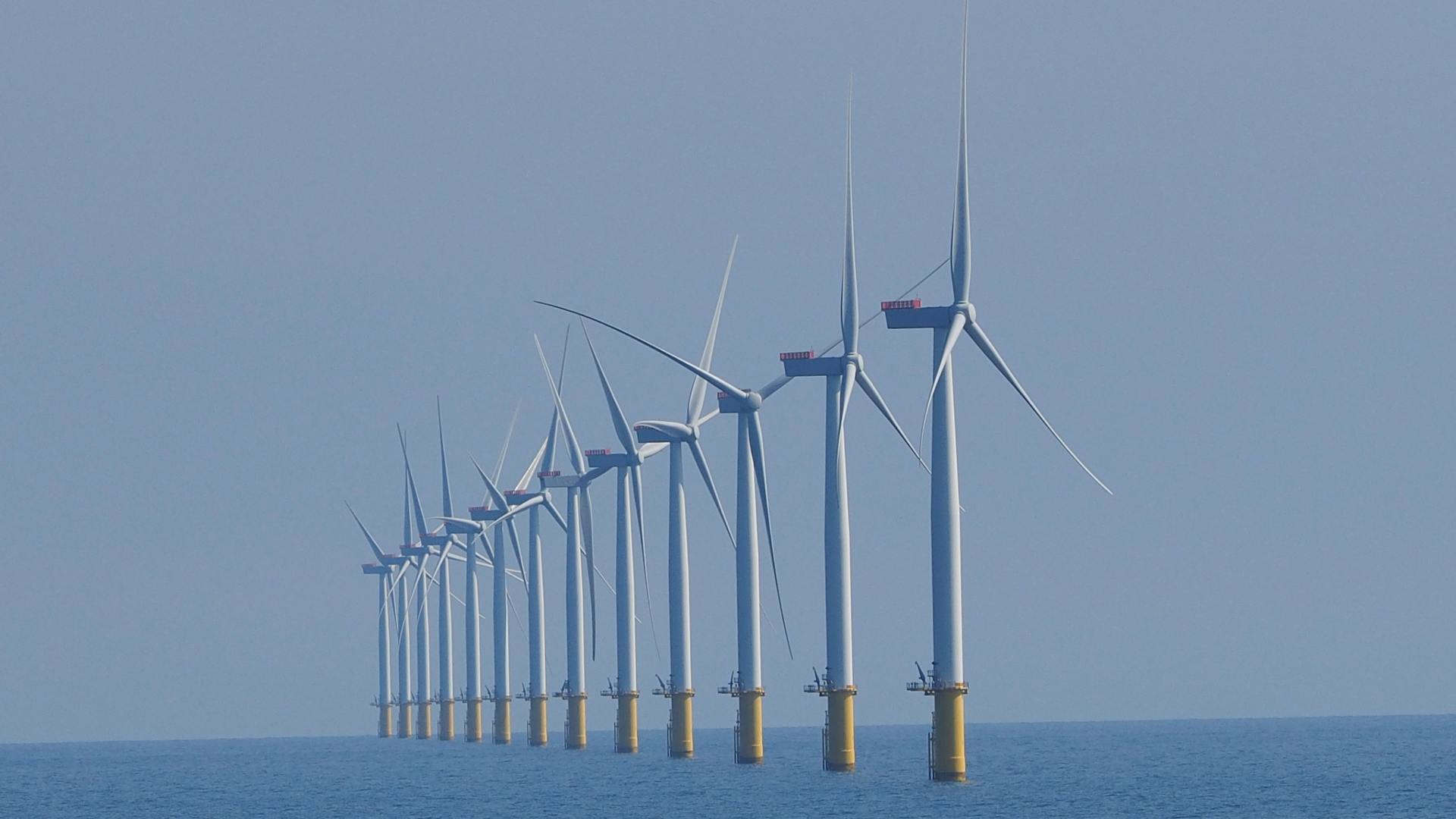
The North Sea offshore wind story is increasingly written in two lead characters: the UK and Germany. Between them, they combine scale, policy and industrial capacity in a way that does more than shape national power mixes — it effectively sets the pace and depth of the basin’s entire offshore transition. A bullish reading is that, despite noise around costs and auctions, both countries are far enough committed in law, targets and infrastructure that backing away from large‑scale North Sea build‑out would now mean unpicking core elements of their energy and industrial strategies.
The UK: from early mover to volume player
The UK still has the deepest track record and the largest installed fleet. By the end of 2023 it had more than 14 GW of offshore wind in operation, the largest national fleet globally, with projects such as Hornsea and Dogger Bank anchoring Europe’s offshore map. Government strategy documents and investment roadmaps set out an ambition of up to 50 GW of offshore wind by 2030, including up to 5 GW of floating capacity, as part of the “clean power by 2030” agenda. That ambition is backed by the Contracts for Difference (CfD) regime, which the UK is now reforming — extending contract terms, adjusting auction parameters and widening eligibility — expressly to “pave the way for more projects to come online” this decade.
Policy support extends beyond tariffs. The UK has earmarked capital for its Floating Offshore Wind Manufacturing Investment Scheme, with up to £160 million flagged for port and fabrication upgrades to support scaled deployment of floating projects in the Celtic and North Seas. Government roadmaps tie offshore wind explicitly to domestic supply‑chain development, framing it as a pillar of a broader industrial strategy rather than a pure climate instrument. For Defoes’ readers, that matters: the more offshore wind is woven into jobs, tax and manufacturing narratives, the harder it is politically to abandon volume targets when short‑term costs or auction rounds disappoint.
Germany: catching up fast, with law‑backed targets
Germany, a relative latecomer offshore compared with the UK, has moved to close the gap with striking speed. In 2022 the federal government, coastal states and transmission operators agreed an “offshore realisation agreement”, committing to expand capacity from just under 8 GW to at least 30 GW by 2030, 40 GW by 2035 and 70 GW by 2045. These figures have since been baked into the Offshore Wind Energy Act and the federal area development plan, which designates specific North Sea and Baltic Sea zones with 36.5 GW of capacity, sets tender years, commissioning schedules and grid connections.
Industry assessments suggest Germany is broadly on track. A joint release from sector groups in early 2025 indicated that the 30 GW mark is likely to be reached in 2031 — one year late — while the 40 GW target could actually be met by 2034 if planning security is strengthened. The legal framework now treats offshore as a central plank of power‑sector decarbonisation and security of supply, not a discretionary add‑on: German government communications explicitly describe accelerated offshore expansion as vital both for climate targets and for reducing exposure to imported fossil fuels. That framing locks in regulatory attention on ports, permitting and grid build‑out, even when cost pressures emerge.
Why these plans underpin a bullish basin‑wide view
Neither jurisdiction is immune to headwinds. The UK has had to revisit auction parameters after a weak offshore round, and developers in both countries face inflation in turbine, vessel and financing costs. But at a structural level, the UK’s pipeline toward 50 GW by 2030 and Germany’s trajectory toward 30/40/70 GW create a floor under North Sea offshore demand that is unusually visible by energy‑transition standards. Both states are aligning seabed leasing, grid planning and industrial policy around offshore volumes that, if delivered, will redefine regional power flows.
For investors, the key insight is that UK and German expansion plans do not sit in isolation. They are embedded in the North Seas Energy Cooperation targets of at least 76 GW by 2030, 193 GW by 2040 and 260 GW by 2050, with the UK as a de facto partner even after Brexit. Their combined build‑out, supported by dedicated legislation, reformed support schemes and port and manufacturing investments, tilts the North Sea decisively toward being a long‑duration offshore wind cluster rather than a transient green experiment. A bullish stance does not ignore project‑level volatility; it recognises that, at the basin level, UK and German commitments have already shifted offshore wind from optional growth theme to structural feature of Europe’s future power system.