
Two Yields, One Forest: Valuing Timber and Carbon Together
Master the Moment and Reach Your Peak with Defoes
"Carbon and timber are not simply additive; they are genuinely interdependent. Real value only emerges when deferred harvest costs, release penalties and sequestration rates are weighed together against timber price and land appreciation, rather than treated as separate income lines."
For the internationally minded investor, forestry has long offered a rare proposition: a tangible, income-generating asset that grows in value while it grows in the ground. Today, that proposition has a second dimension. The same acre of forest can now be valued for what it produces and for what it withholds — timber on one side, carbon on the other. Understanding how these two revenue streams are priced together is becoming essential for anyone considering land as part of a resilient, diversified portfolio and central to how specialist platforms structure client access to this asset class.
Traditional timberland valuation rests on Land Expectation Value, the present worth of an acre in perpetual timber production, factoring in growth rates, harvest cycles and reinvestment costs [web:46]. Carbon introduces a parallel calculation. Analysts estimate annual carbon value by multiplying a forest's incremental sequestration by the prevailing carbon price, then finding the present value of that stream up to harvest. Voluntary market prices for forestry credits have recently traded near $5 to $20 per tonne of CO₂ equivalent, though nature-based credits can command a premium when additionality and permanence are well documented [web:35][web:37].
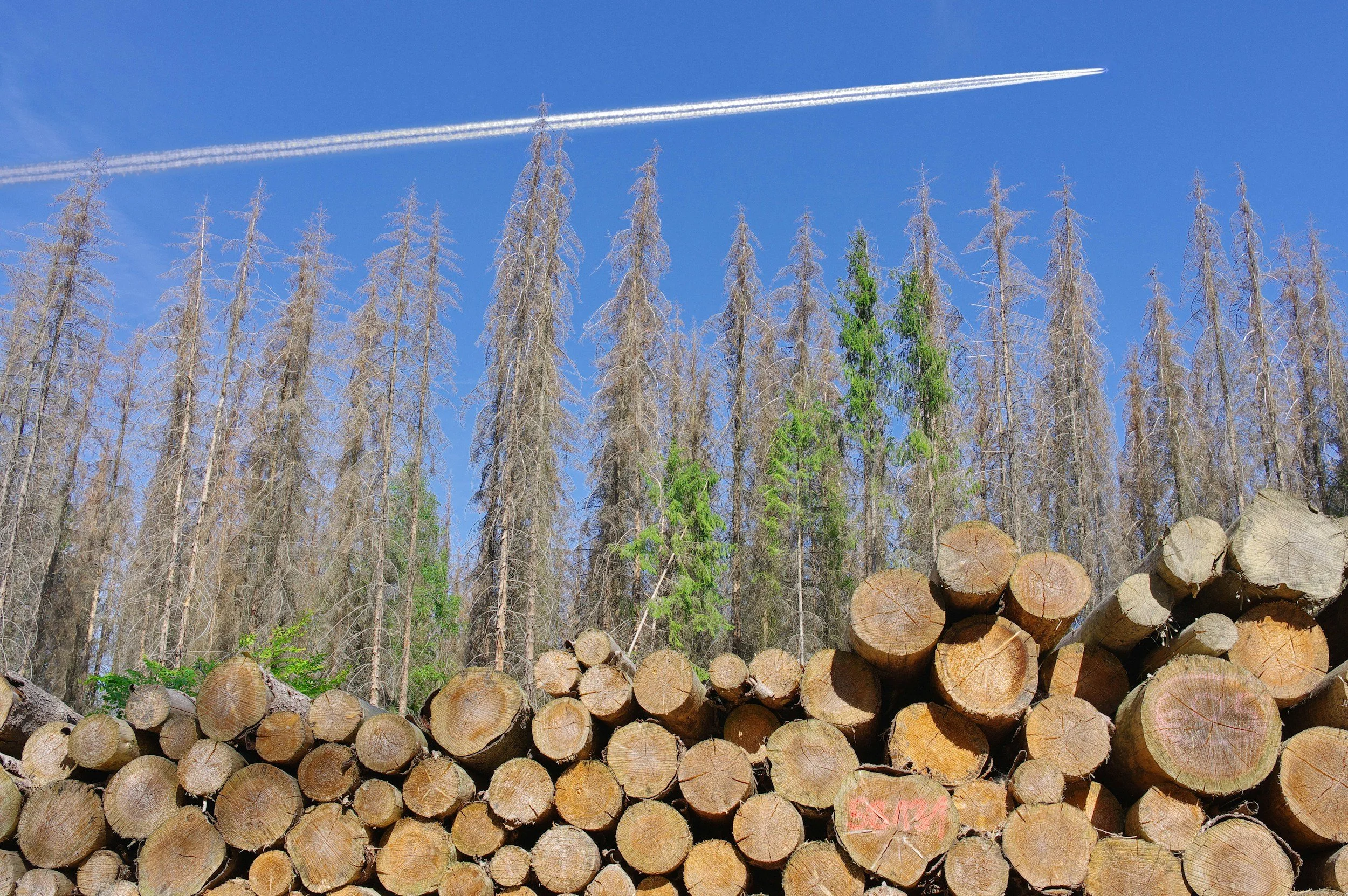
Combining the two is not simple addition. A forest managed to maximise carbon storage typically means deferring harvest, which delays timber income and can trigger a "carbon release penalty" when trees are eventually cut, since stored carbon is partially released back into the atmosphere. Analysts net this penalty against cumulative carbon payments to determine whether an extended rotation genuinely adds value or merely defers a cost. The two streams therefore sit in tension: more carbon revenue often means less near-term timber revenue, and the optimal balance depends squarely on price assumptions for both.
For landowners and investors, structure matters as much as arithmetic. US programmes illustrate the range: California's compliance market has paid $20 to over $100 per acre annually under 25-year credit terms, while private schemes such as Forest Carbon Works offer roughly $10 per acre or a 25% revenue share over multi-decade agreements [web:45]. Some contracts permit continued harvesting; others restrict it substantially, which materially changes the combined valuation. This is why credible forest carbon platforms lean on rigorous measurement, drawing on forest inventory plots, satellite imagery and LiDAR to verify sequestration, rather than relying on estimates alone [web:40].
What this means for capital allocation is structural, not incidental. Timberland already offers biological growth, price appreciation and land value gains largely uncorrelated with equity markets. Layering carbon revenue onto that base can improve diversification further, provided the valuation properly accounts for deferred harvest costs and release penalties rather than treating carbon as simply additive. Frontiers research notes that some corporate timberland owners still find core land values exceed potential carbon returns, meaning carbon is best understood as a complementary yield, not a replacement for sound forestry economics.
For those exploring access to this asset class, the discipline lies in asking the right questions before committing capital: how is additionality demonstrated, what happens to income if harvest is delayed, and how sensitive is the combined valuation to carbon price movements. Global demand for wood products continues to underpin the timber side of the equation, while institutional appetite for verified, high-integrity carbon assets continues to shape the other. Defoes' role is to help clients understand this structure clearly, so decisions about real assets are made with full visibility of how each revenue stream is built and how the two genuinely interact over a multi-decade horizon, rather than presenting carbon as a simple bonus atop conventional timber income.
Disclaimer: The content provided herein is for general informational purposes only and does not constitute financial or investment advice. It is not a substitute for professional consultation. Investing involves risk, and past performance is not indicative of future results. We strongly encourage you to consult qualified experts tailored to your specific circumstances. By engaging with this material, you acknowledge and agree to these terms.