
Solar Power’s Growth Despite Low‑Sunlight Regions
Master the Moment and Reach Your Peak with Defoes
“Defoes goes beyond latitude myths — showing how technology gains, EU rooftop mandates and shifting price dynamics are turning even low‑sunlight regions into viable, system‑relevant solar markets.”
For years, solar power in high‑latitude, cloudy regions was treated as an almost self‑evident contradiction. Lower irradiance, long winters and snow load were assumed to lock these markets out of serious PV deployment. A growing body of data and system‑level planning now point in the opposite direction: with modern technology, supportive policy and changing power‑price dynamics, many low‑sunlight regions are becoming structurally viable — and in some cases strategically attractive — for solar build‑out. The bullish stance is not that latitude no longer matters, but that it has moved from “hard stop” to one of several design variables in systems where policy and economics increasingly pull solar in.
Technology and climate working together, not against each other
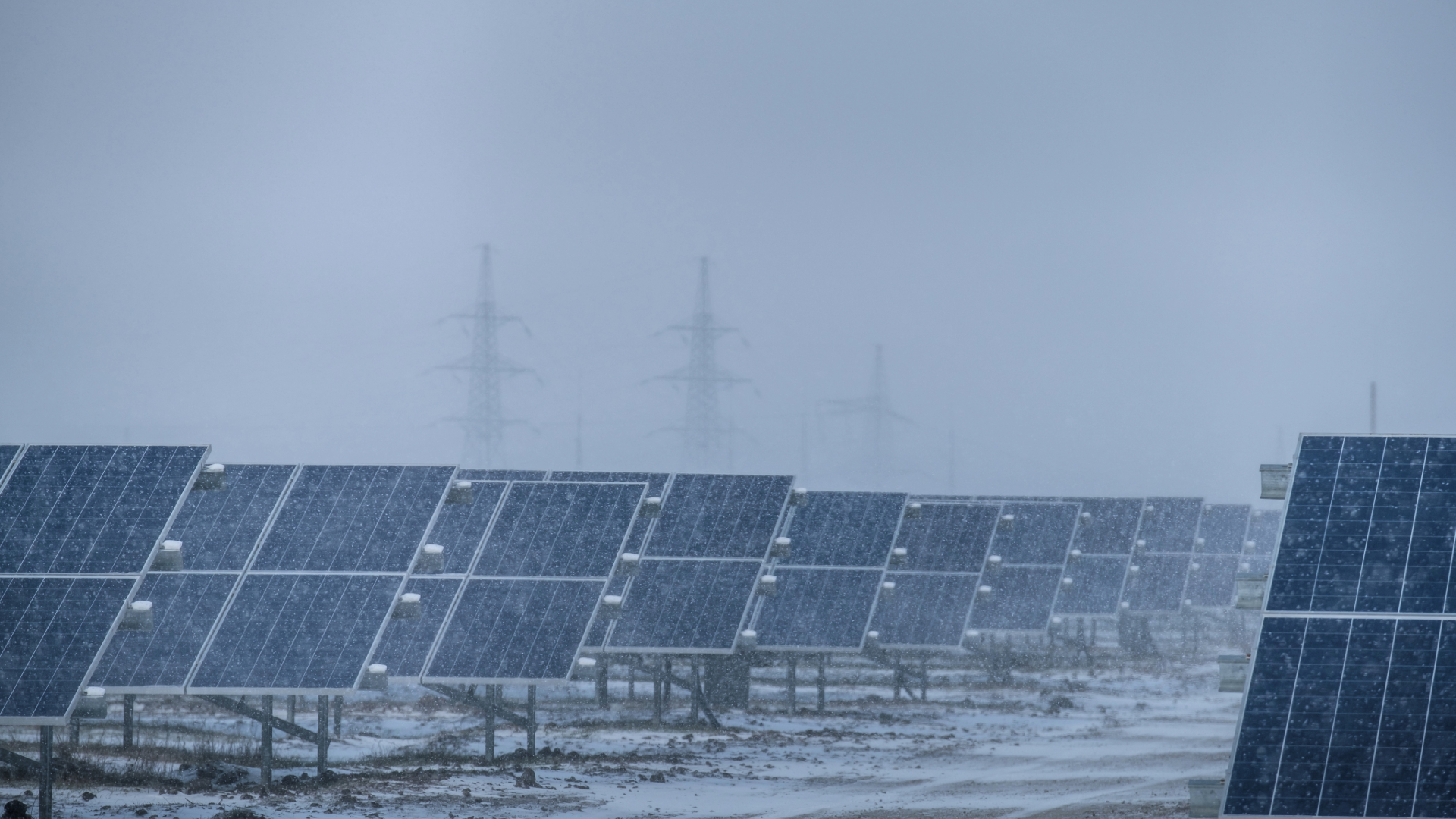
Technical assessments of solar potential at high latitudes underline that lower annual irradiance is only part of the story. A systematic review of solar accessibility in high‑latitude regions finds that factors such as panel tilt, tracking, albedo from snow, and low operating temperatures can materially improve performance, particularly in shoulder seasons. Cold climates help PV modules operate closer to their optimal temperature, mitigating efficiency losses that are common in hotter regions. Case studies highlight that, while annual output per kilowatt is lower than in the sunbelt, the gap is narrower than many assume once modern module efficiencies, bifacial designs and system‑level optimisation are factored in.
Recent research on the economic viability of large‑scale solar PV in Nordic conditions reinforces this point. Analyses for Finland and the broader Nordic region show that under plausible cost trajectories and power‑price scenarios, utility‑scale PV can reach competitive internal rates of return by 2030, even with modest capacity factors. These studies stress that high wholesale‑price volatility, carbon pricing and the value of summer daytime generation in hydro‑dominated systems all support the case for PV, despite lower absolute irradiation.
Policy is deliberately pulling solar into “marginal” regions
If technology and climate set the technical envelope, policy determines how much of that envelope is used. The EU’s Solar Energy Strategy explicitly treats solar as a “shining star” of the clean transition and targets at least 750 GW of installed PV capacity by 2030 across the bloc, not just in its southern tier. The legislative train around the Solar Energy Strategy and REPowerEU includes a Solar Rooftop Standard that requires member states to introduce mandates for solar on suitable new and renovated buildings, with implementation deadlines running through the mid‑2020s. These mandates apply just as much in Northern and Central Europe as in Spain or Greece, effectively hard‑wiring PV into future building stock in lower‑irradiance climates.
At the same time, national and sub‑national policies in high‑latitude regions are being structured to match solar’s output profile with system needs. Nordic and Baltic countries are experimenting with support for hybrid projects that combine solar with storage or with existing hydro and wind, use corporate power‑purchase agreements, or tie PV into industrial‑site decarbonisation. The result is a policy environment where solar is increasingly valued for when and where it produces power — for example, preserving hydro reservoirs in dry summers or reducing daytime dependence on gas‑fired peakers — rather than dismissed on annual kilowatt‑hour totals alone.
Why the bullish case in low‑sunlight regions is now credible
None of this removes real constraints. High‑latitude solar still faces seasonal extremes: very short winter days, snow coverage and low sun angles, all of which complicate design and reduce winter output. Grid integration can be challenging when solar is layered onto systems that already have high shares of variable wind or inflexible nuclear. However, these constraints are increasingly treated as engineering and market‑design problems to be solved, rather than reasons to exclude solar from the mix.
From a Defoes perspective, the inflection is clear. First, technical and economic analyses in Nordic and other high‑latitude settings now demonstrate that PV can be bankable under realistic assumptions, especially when paired with appropriate tilt, siting and system‑integration strategies. Second, EU‑level legislation and national policies are actively pulling solar into building codes, industrial planning and long‑term energy strategies even in lower‑irradiance countries. Third, as more regions confront the twin pressures of decarbonisation and security of supply, the diversification value of adding solar — even if its capacity factor is lower — becomes more important than extracting the last unit of yield from each installed kilowatt.
The bullish stance on solar in low‑sunlight regions therefore does not rest on pretending that Helsinki is Valencia. It rests on seeing solar as one element in a broader system transition where technology, policy and market design are steadily eroding latitude as a structural barrier. For disciplined capital, the analytical task is to identify where those three forces are most aligned: jurisdictions where high‑latitude solar is being integrated into grids, codes and corporate demand in ways that can support durable, risk‑adjusted returns — even under grey skies.