
Offshore Wind vs Onshore Wind Economics: Future Investment Allocation
Master the Moment and Reach Your Peak with Defoes
"Onshore and offshore wind are not competing for the same capital. One offers lower cost and faster deployment; the other, stronger resource quality at greater capital intensity. Allocation should reflect risk appetite and horizon, not a single technology's headline economics."
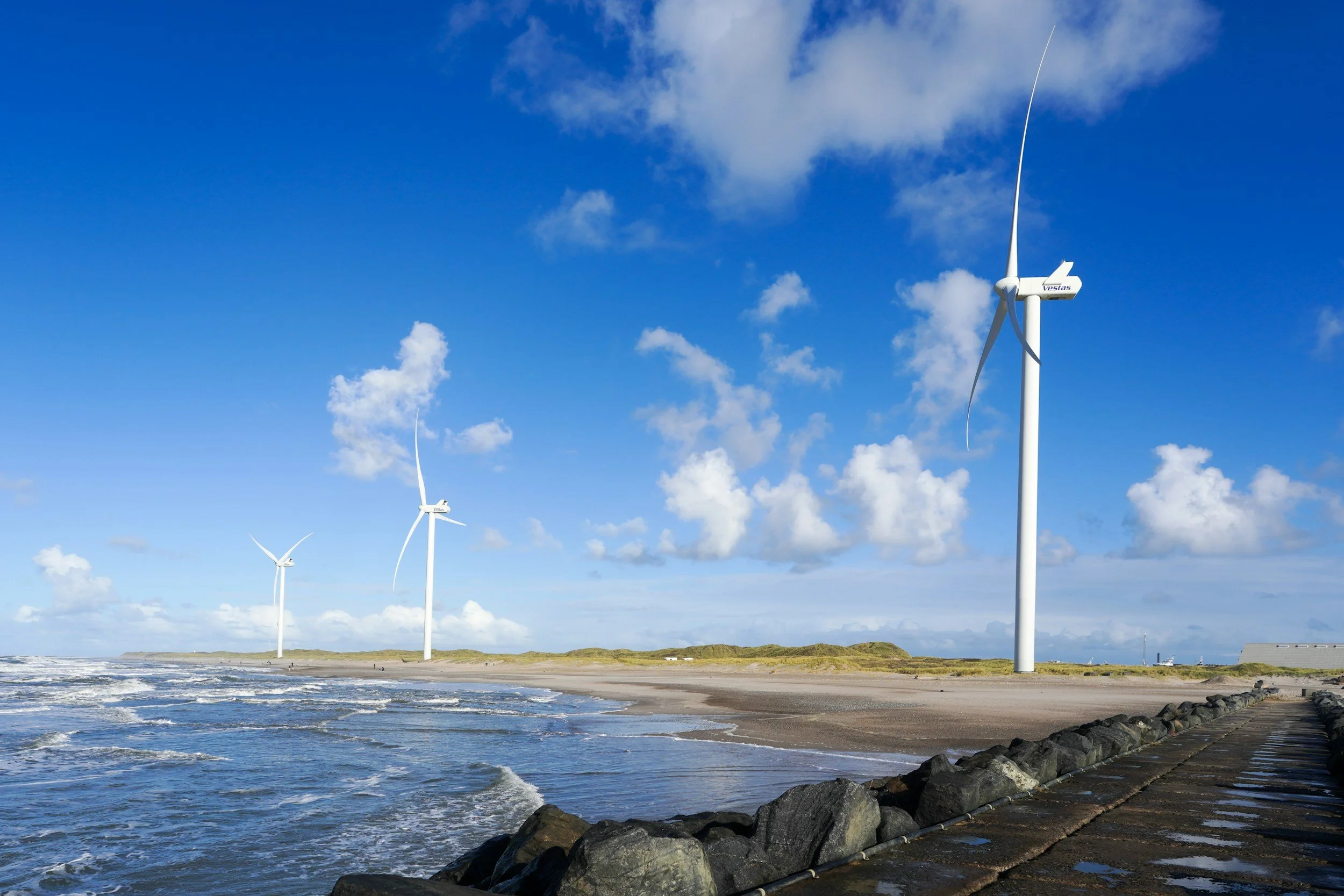
Onshore and offshore wind occupy different points on the risk-return spectrum, and 2026 has sharpened that distinction rather than closed it. Lazard's latest levelised cost of energy analysis puts unsubsidised onshore wind between USD 37 and 99 per megawatt-hour, while offshore wind ranges from USD 105 to 167. This gap of roughly two to three times reflects structural differences in construction, marine logistics and financing risk, not a temporary market anomaly. For allocators building long-term renewable exposure, the practical question is not which technology is "better," but which risk profile suits a given capital structure and time horizon.
Onshore wind's advantage rests on maturity and simplicity. Turbine technology is well proven, land-based logistics are comparatively straightforward, and capital costs in 2026 sit around USD 1,150 to 1,800 per kilowatt, a fraction of offshore requirements. This has pushed best-in-class onshore projects in strong wind resource regions to costs as low as USD 20 to 26 per megawatt-hour, competitive with or below new natural gas generation in many markets. The trade-off is planning friction: onshore projects increasingly face local opposition, land-use constraints and visual-impact objections that can extend development timelines even where the underlying economics are favourable.
Offshore wind carries materially higher capital intensity, with 2026 total capital expenditure averaging around USD 3,800 per kilowatt, roughly double the onshore figure. Foundations, subsea cabling, grid connection and specialised installation vessels account for the bulk of this premium, and vessel day rates alone can run USD 150,000 to 300,000. Despite this, offshore wind has crossed a meaningful threshold in 2026, with new projects achieving USD 75 to 95 per megawatt-hour, now broadly competitive with new gas generation in several markets. However, this progress has not been linear. Industry analysis describes a genuinely difficult recent period for the sector, marked by inflation, supply-chain bottlenecks and operational backlogs that reversed several years of steady cost declines.
Future Investment Allocation
For allocators weighing future exposure, the calculus increasingly turns on capacity factor and grid value rather than headline levelised cost alone. Offshore sites typically deliver stronger and steadier wind resources, translating into higher capacity factors and greater output predictability, which can command a premium in markets that value firm, dispatchable-adjacent generation. Onshore assets, by contrast, offer faster deployment, lower financing risk and greater flexibility to distribute capital across many smaller sites rather than concentrating exposure in a handful of large, capital-intensive developments. Component spend in offshore wind is forecast to more than double in 2026 compared with 2025, suggesting renewed capital commitment even as individual project economics remain sensitive to interest rates, currency and commodity input costs.
Government support remains a decisive variable for both technologies, but particularly for offshore wind, where projects depend heavily on long-term power purchase agreements, contracts for difference or similar mechanisms to underwrite construction risk. Analysts covering the sector in 2026 point to insufficient financial support from governments, alongside market uncertainty, as recurring themes constraining the pace of offshore deployment. This makes policy continuity, rather than technology cost alone, a central factor in assessing offshore allocation risk over a multi-year horizon.
For diversified portfolios, a blended approach may offer more resilience than concentration in either technology. Onshore wind can provide nearer-term, lower-risk income generation with shorter development cycles, while offshore wind may suit investors with longer horizons, higher risk tolerance and an appetite for exposure to a maturing but still-consolidating capital-intensive asset class.
Disclaimer: The content provided herein is for general informational purposes only and does not constitute financial or investment advice. It is not a substitute for professional consultation. Investing involves risk, and past performance is not indicative of future results. We strongly encourage you to consult qualified experts tailored to your specific circumstances. By engaging with this material, you acknowledge and agree to these terms.